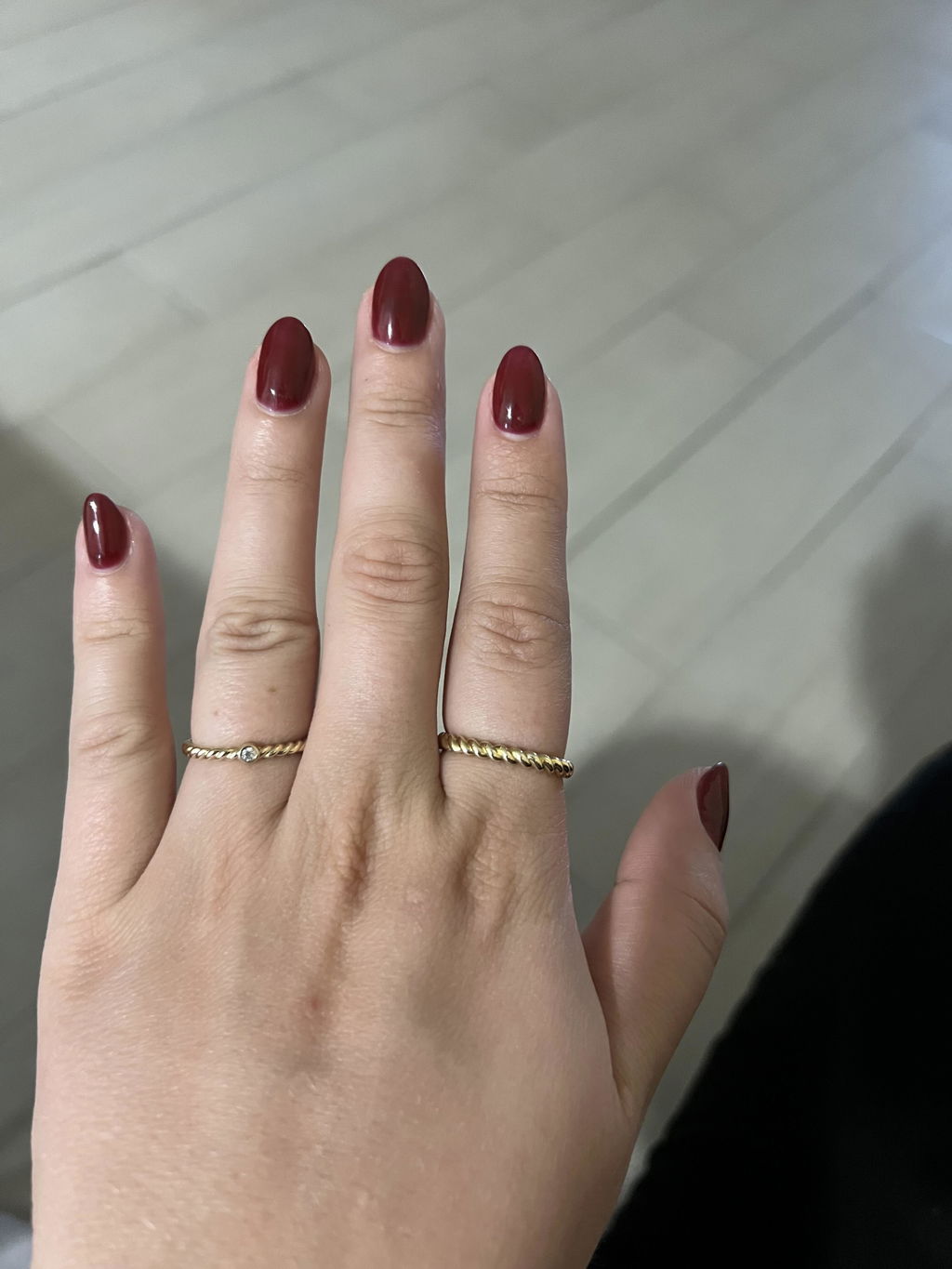
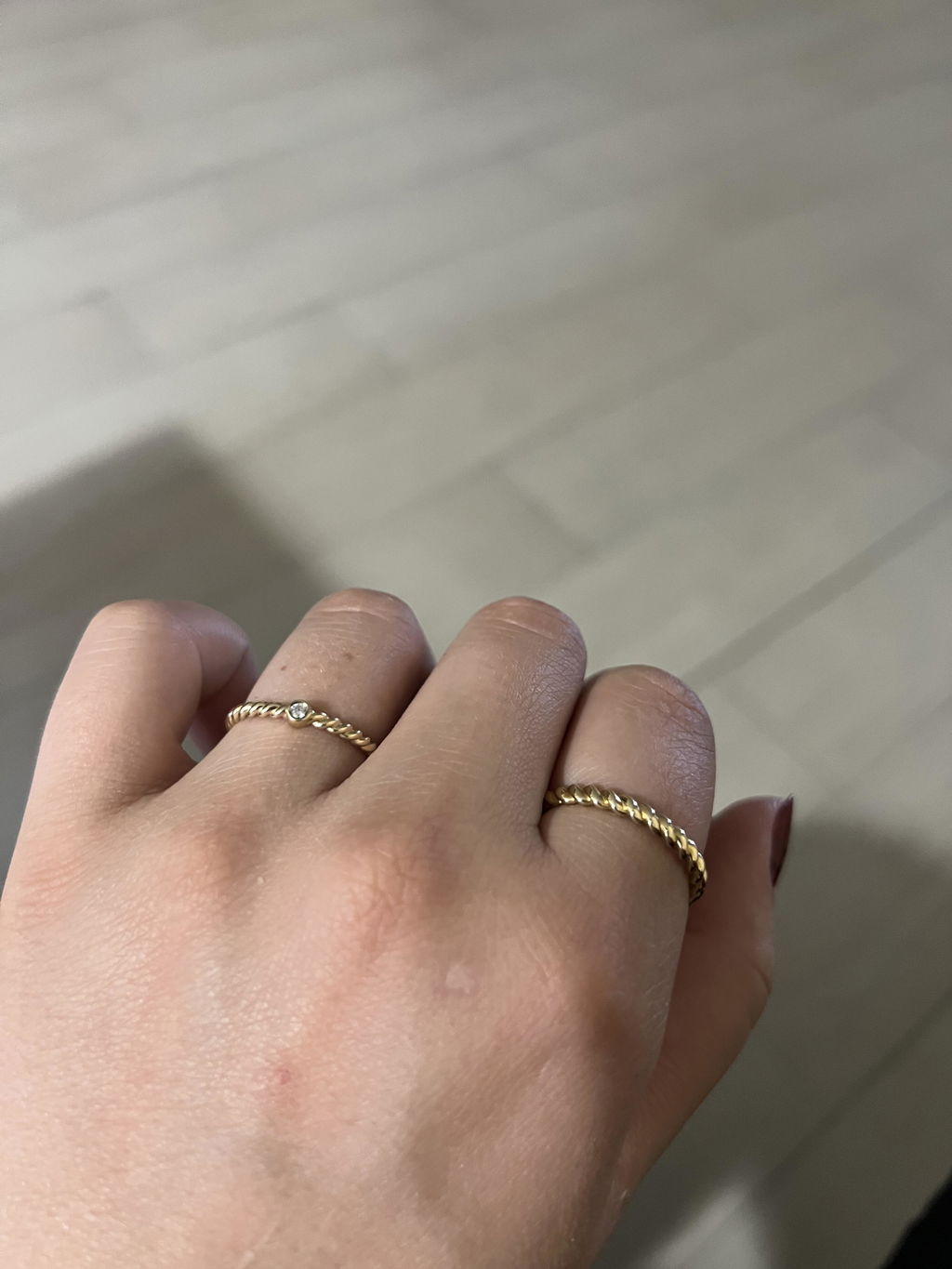
1.5 Carat Emerald Cut Lab-Grown Diamond Solitaire Engagement Ring
A 1.5ct emerald cut Lab-Grown Diamond, D–F color, VS+ clarity, IGI certified, in a four-prong solitaire on a plain polished band in solid 14K gold. Made to order in 7 to 10 business days on my bench in Woodside, Queens. The emerald cut rewards a good stone and exposes a bad one, and both are more true at this size.
How big is a 1.5 carat emerald cut?
Roughly 7.5mm long by 5.5mm wide. A 1ct emerald runs about 7mm by 5mm, so the gain in millimeters is modest — but the table grows faster than the outline does, and the table is what you actually see. A 1.5ct emerald cut reads considerably more substantial than a 1ct one, more than the numbers suggest.
Does an emerald cut sparkle?
Not the way a round does, and that is the point. An emerald cut is a step cut — fewer, larger, parallel facets instead of dozens of small triangular ones. What you get is long rectangular flashes that slide across the stone as your hand moves. It reads as still water rather than fire. If you want rainbows across a room, buy a round. If you want a stone that looks expensive from across a table, this is the shape, and at 1.5 carats it is unmistakable.
Why does clarity matter more at this size?
Because step-cut facets are windows, not mirrors. A brilliant cut bounces light back and buries an inclusion in the noise; an emerald cut lets you look straight down into the stone, and the larger the table the more there is to look into. An inclusion that would be marginal at a carat is obvious at a carat and a half. This is the single most important thing to understand about buying a large emerald cut, and it is why yours is VS+ rather than the SI grades common at this weight.
What about color?
Same logic, same direction. The open table shows body color the way it shows inclusions, and more surface means more to show. A G or H that would pass unnoticed in a brilliant reads faintly warm here, especially against white gold or platinum. Yours is D through F — the colorless range — which is what keeps the table clean and the flashes white. The IGI report ships with the ring.
Are the corners fragile?
No, and this is one of the emerald cut's quiet advantages at larger sizes. The corners are beveled rather than pointed, so there is nothing sharp to chip against a doorframe the way a marquise or pear tip can. Four prongs, one at each corner, and the stone is secure without needing V-prongs or a reinforced head.
Which wedding band fits it?
A contoured band. There is a second gallery under the head — an extra rail of gold beneath the basket that carries the stone's weight and stops the prongs flexing over years of wear. It is why this head will still be tight in a decade, and most makers leave it out. It is also why a straight band will not seat: the band meets the gallery rather than the shank and stands off, leaving a gap under the stone. A curved band dips at the center, clears the gallery and nests flush. I make both to order, so tell me and I will cut the pair to meet properly — or start with the plain contour band or the pavé contour.
How long does it take, and can it be resized?
Made to order in 7 to 10 business days, sizes 4 through 9 including halves. Resizing is complimentary within 60 days of delivery, craftsmanship carries a lifetime warranty, and you have 14 days to return it if it is not right and you have not had it engraved. It ships fully insured in our signature suede pouch with the IGI report.
Want a different weight or shape?
The same ring runs at 1ct. To compare shapes, start with the diamond shape guide. Anything not on the site, I build custom.
Who makes it?
I do. One bench, one pair of hands, in a workshop in Woodside, Queens. An emerald cut demands precision at the corners — a millimeter out and the rectangle stops reading as square to the band, and there is no faceting noise to cover it. Nothing here sits in a case waiting for a buyer.