If you're shopping for an ultra thin band engagement ring, you've almost certainly landed on the same two shapes: oval and round. They're the two most searched, most purchased, and most universally flattering diamond shapes in the world. But on a 1.5mm band, they create very different looks — and the right choice depends entirely on what you want the ring to say.
Here's the full breakdown.
The Round Brilliant: The Standard Against Which All Others Are Measured
The round brilliant diamond has 58 facets engineered over more than a century of refinement to maximize light return, fire, and scintillation. It is, by every optical measure, the most brilliant diamond shape ever created. When light enters a well-cut round brilliant, it bounces between facets and exits through the table in a display of white light and spectral color that no other shape fully replicates.
On a 1.5mm thin band, the round brilliant creates the purest expression of the solitaire engagement ring. The circular outline is perfectly symmetrical. The stone sits centered and balanced above the band. There is nothing asymmetrical, nothing directional, nothing that requires orientation. It simply sits there and fires in every direction simultaneously.
The round brilliant on a thin band is the engagement ring in its most essential, most timeless form. It has been the defining engagement ring for over 100 years and shows no sign of changing.

Round Brilliant: Key Facts
-
Facets: 58
-
Brilliance: Maximum — the highest light return of any diamond shape
-
Finger effect: Neutral — does not elongate or widen the finger
-
Apparent size: Appears slightly smaller than an oval of the same carat weight due to its compact, deep shape
-
Best for: Those who want maximum brilliance, timeless style, and a ring that works with everything
The Oval: The Shape That Changed Everything
The oval diamond is the round brilliant's elongated cousin — same brilliant facet pattern, same fire and scintillation, but stretched into an elliptical outline that does something the round cannot: it makes the finger look longer.
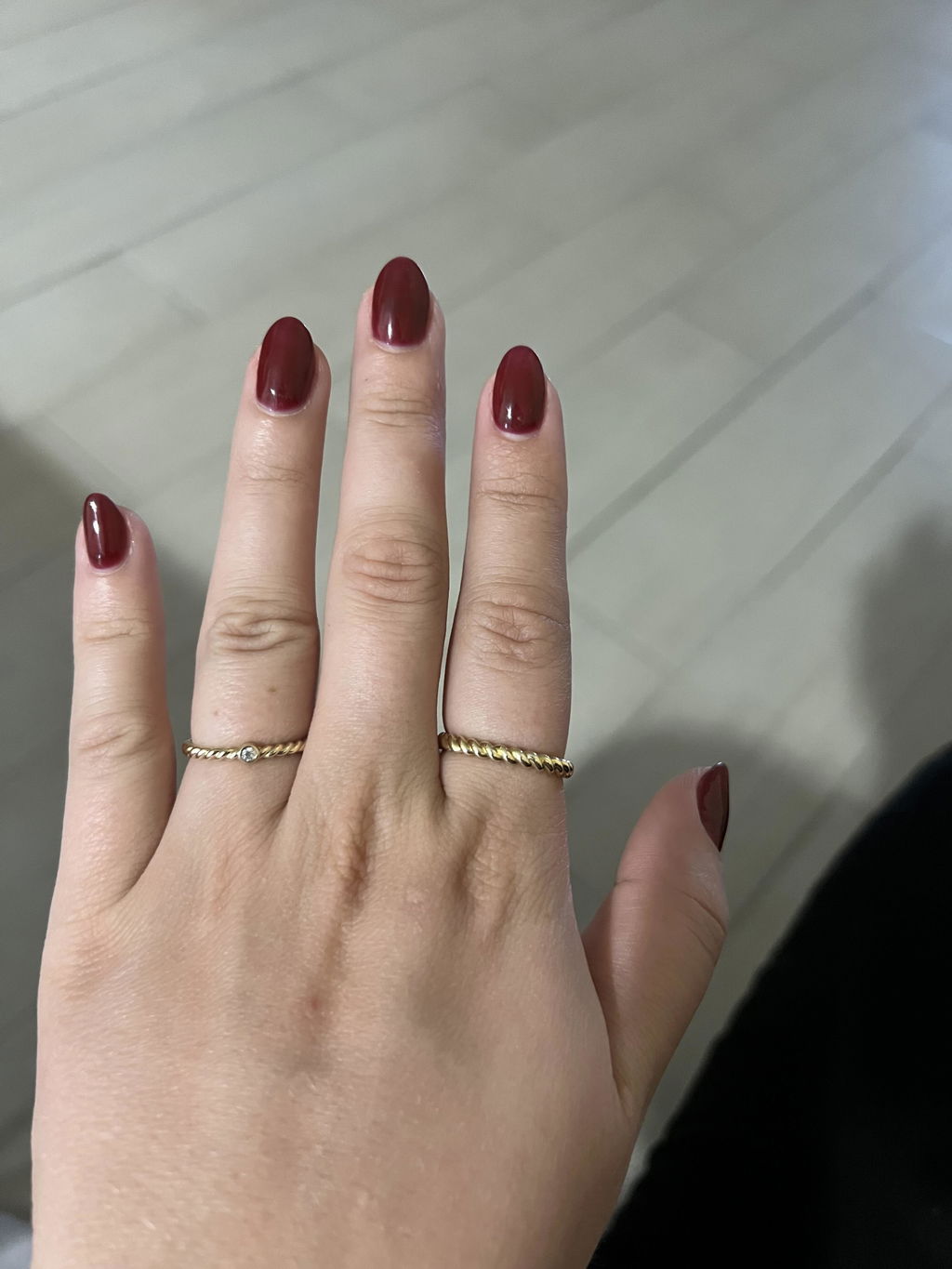
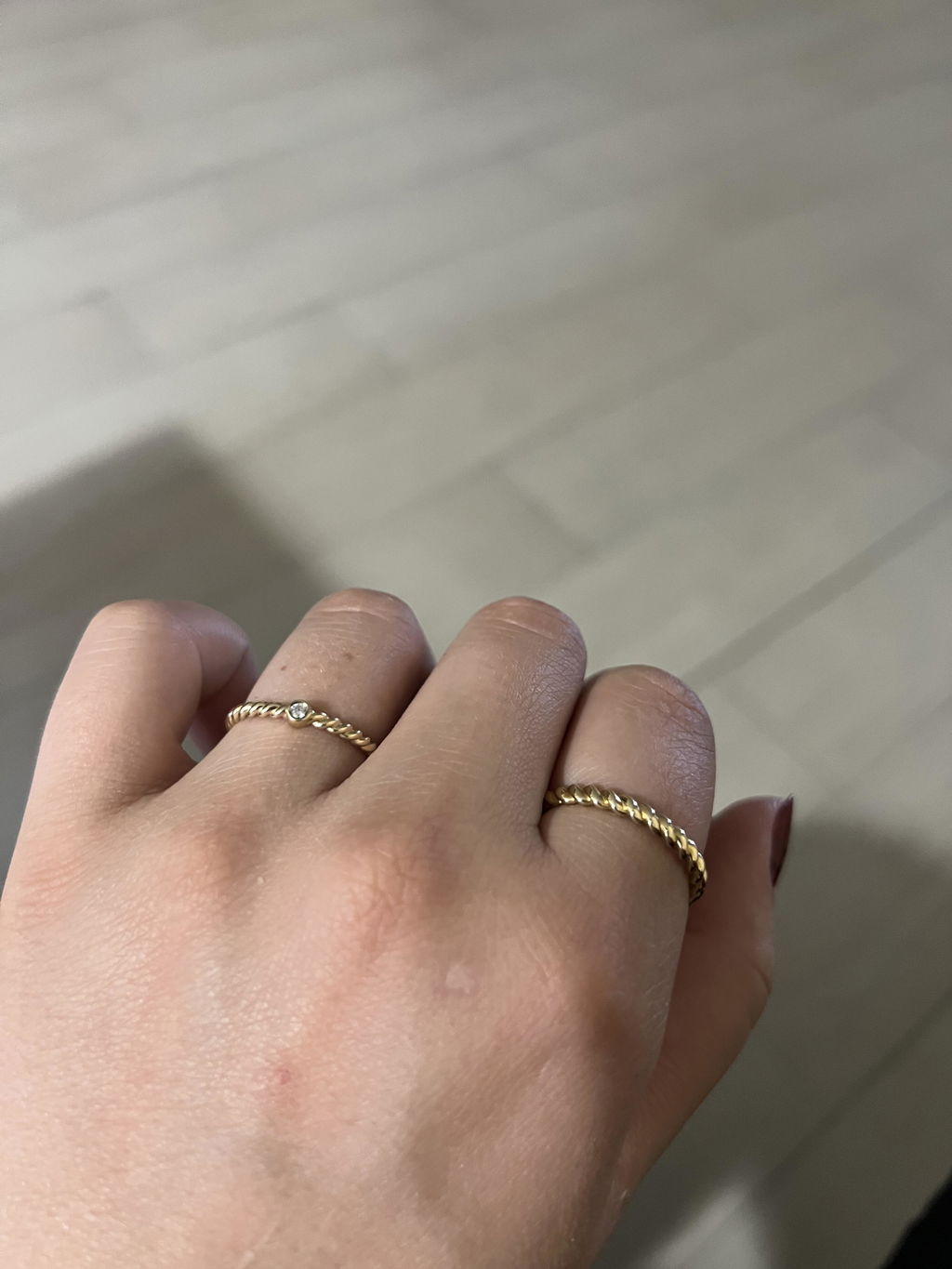
The oval's elongated shape creates a visual line along the finger that draws the eye upward, creating the illusion of length and slenderness. On a 1.5mm thin band, this effect is amplified — the band disappears and the oval appears to float directly on the skin, its length uninterrupted by any visible setting.
The oval also appears larger than a round of the same carat weight. Because the oval is shallower and has more surface area relative to its depth, a 0.50ct oval will look noticeably larger face-up than a 0.50ct round. For buyers who want maximum visual impact per dollar, the oval consistently delivers.

Oval: Key Facts
-
Facets: 56–58
-
Brilliance: Excellent — nearly identical to round brilliant in light return
-
Finger effect: Elongating — creates the illusion of a longer, slimmer finger
-
Apparent size: Appears larger than a round of the same carat weight
-
Best for: Those who want a modern, romantic look with maximum finger-lengthening effect
Head-to-Head: Oval vs. Round on a 1.5mm Thin Band
Brilliance
The round wins on pure optical brilliance — its symmetrical facet pattern is optimized for maximum light return. The oval is close, but the elongated shape means some light leaks from the tips. In practice, both shapes are extraordinarily brilliant and the difference is imperceptible to the naked eye.
Apparent Size
The oval wins. Its shallower depth and greater surface area make it appear 10–15% larger than a round of the same carat weight. If you want the most diamond for your budget, the oval delivers more visual impact per carat.
Finger Effect
The oval wins for elongation. The directional shape creates a visual line along the finger that makes it appear longer and slimmer. The round is neutral — it doesn't elongate or widen. If finger length is a priority, the oval is the clear choice.
Timelessness
The round wins. The round brilliant has been the dominant engagement ring shape for over a century and is the least susceptible to trend cycles. The oval has surged in popularity over the past decade and is currently at peak trend — it will remain beautiful, but it is more of its moment than the round.
Versatility
The round wins. Because it has no directional orientation, the round works with every band style, every setting, and every hand shape. The oval requires attention to orientation (east-west vs. north-south) and can look different depending on finger width.

Which Should You Choose?
Choose round if: You want maximum brilliance, a ring that will never feel dated, and a stone that works with every band and every hand. The round brilliant on a thin band is the engagement ring in its most essential form.
Choose oval if: You want a modern, romantic look, maximum apparent size for your budget, and a finger-lengthening effect. The oval on a thin band is the defining engagement ring aesthetic of this decade.
Both shapes are available in our thin band collection in solitaire and pavé band configurations, in 14K yellow, white, and rose gold, with lab-grown diamonds in D-F color and VS clarity.
Shop Thin Band Engagement Rings by Shape
SHOP THIN BAND ENGAGEMENT RINGS