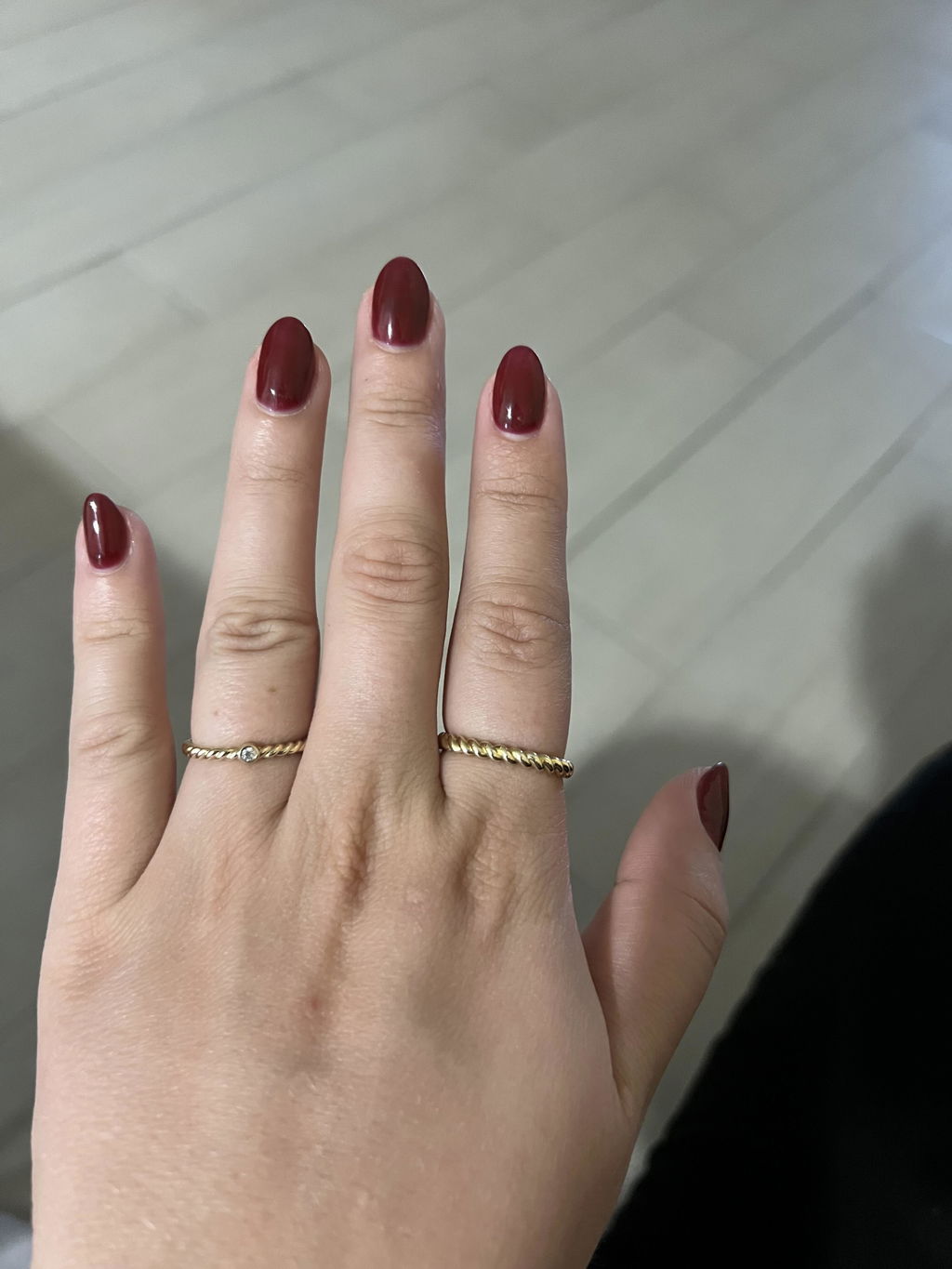
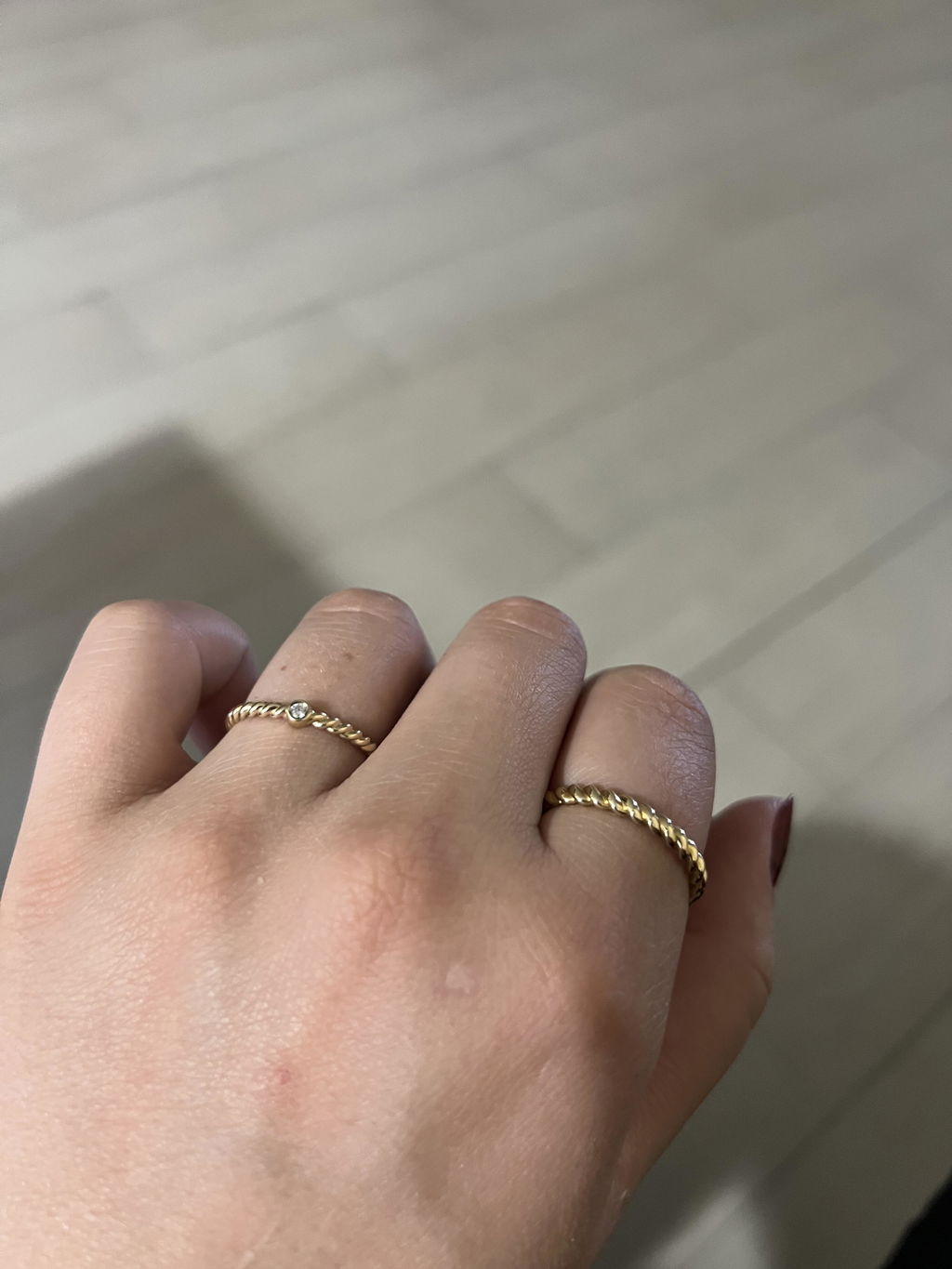
The pear shaped diamond on a 1.5mm ultra thin band is one of the most romantic silhouettes in fine jewelry. The pointed tip hovers above the finger like it's barely touching. The rounded shoulder flows into a band so slim it nearly disappears. The result is a ring that looks like it was placed there by hand — delicate, intentional, and completely unforgettable.
Here's everything you need to know about pear shaped engagement rings on ultra thin bands.
What Makes the Pear Diamond Special?
The pear diamond — also called a teardrop diamond — is a hybrid shape that combines the rounded brilliance of a round diamond with the elongated silhouette of a marquise. The result is a shape with exceptional brilliance, a distinctive pointed tip, and the most dramatic finger-lengthening effect of any diamond shape.
The pear has 58 facets arranged in a brilliant pattern, which means it returns light with the same fire and scintillation as a round brilliant. But its elongated outline creates a visual line along the finger that draws the eye upward, making the finger appear longer and slimmer than any other shape can achieve.
On a 1.5mm ultra thin band, the pear's pointed tip appears to float above the finger with no visible support — a silhouette that is unmistakably romantic and distinctly modern at the same time.
Pear Diamond: Key Facts
- Facets: 58
- Brilliance: Excellent — brilliant-cut facet pattern, nearly identical to round in light return
- Finger effect: Maximum elongation — the most finger-lengthening shape available
- Apparent size: Appears larger than a round of the same carat weight due to its elongated surface area
- Best for: Those who want a romantic, distinctive silhouette with maximum finger-lengthening effect

Orientation: Which Way Should the Point Face?
The pear diamond has a directional shape, which means orientation matters. There are two ways to wear it:
Point Toward the Fingertip (Traditional)
The classic orientation. The pointed tip faces outward toward the nail, and the rounded shoulder sits closer to the hand. This orientation maximizes the finger-lengthening effect and is the most common way pear diamonds are worn. The pointed tip creates a visual arrow that draws the eye along the length of the finger.
Point Toward the Hand (East-West)
A more contemporary orientation where the point faces inward toward the palm. This creates a wider, more horizontal silhouette and a distinctly modern look. Less common, but increasingly popular among those who want something unexpected.
At Black Pearl of Queens, our pear solitaire settings are designed for the traditional north-south orientation — point toward the fingertip — which maximizes the elongating effect on a 1.5mm band.
Solitaire vs. Pavé: Which Pear Thin Band Is Right for You?

Pear Solitaire on a Plain 1.5mm Band
The plain solitaire is the purest expression of the pear on a thin band. Nothing competes with the stone. The pointed tip and rounded shoulder are the entire story. If you want a ring where the pear diamond is the undisputed focal point — romantic, minimal, and completely timeless — the plain solitaire is your answer.
Pear on a Pavé 1.5mm Band
The pavé band adds micro-set diamonds along the shoulders of the ring, creating a continuous river of sparkle from the center stone outward. On a pear diamond, the pavé band amplifies the stone's brilliance and creates a seamless transition from the diamond to the band. The result is a ring that catches light from every angle — the pointed tip fires, the pavé shoulders fire, and the whole ring glows.

What Metal Works Best with a Pear Diamond?
All three of our 14K gold options work beautifully with the pear shape, but each creates a different mood:
- 14K Yellow Gold — Warm and romantic. The yellow gold band complements the pear's soft, teardrop silhouette and creates a vintage-inspired look that is deeply flattering.
- 14K White Gold — Crisp and modern. White gold maximizes the contrast between the band and the diamond, making the stone appear brighter and more prominent.
- 14K Rose Gold — Romantic and distinctive. Rose gold is the most emotionally resonant metal for a pear diamond — the warm pink tone amplifies the teardrop shape's inherent romanticism.
Does the Pear Diamond Show Color?
The pear diamond can concentrate color at its pointed tip — a phenomenon called color concentration that is more visible in lower color grades. For this reason, we recommend D-F color lab-grown diamonds for pear shapes on thin bands, where the stone is the undisputed focal point. All diamonds in our collection are D-F color, which eliminates any visible color concentration at the tip.
Why Lab-Grown for a Pear Diamond?
Lab-grown pear diamonds are chemically, physically, and optically identical to mined pear diamonds. The only difference is where they were created. For pear shapes specifically, lab-grown diamonds allow you to access the D-F color grades that eliminate tip color concentration — at a price point that would be impossible with mined stones of equivalent quality.